Water damage restoration in theTreasure Valley
Meridian and Nampa. Call any hour and you reach one of the two people who own the company. Every job gets a private page with daily moisture readings, photos, and what happens next.
- 24/7 emergency response
- 100+ five-star Google reviews
- IICRC certified · RCE-67387
- Locally owned · 10 years
The first five minutes
Do these before we get there. They matter more than anything we bring on the truck.
- Shut off the water at the main, if you can reach it safely.
- Cut power to the wet area at the breaker. Don’t wade in to do it.
- Photograph everything before you move it, then lift what you can off the floor.
- Don’t set fans yet. Airflow without dehumidification pushes moisture deeper into walls and can complicate your claim.
Then call (208) 391-5248. A person answers 24 hours a day, and we’ll walk you through what happens next.
Your job page
Every customer gets a private link, and you can watch your own job dry. What we found, what’s running, and how the numbers are moving, updated as we work, not when you call to ask.
- Status
- where the job stands today, in plain language
- Readings
- every room's moisture numbers, logged daily
- Photos
- numbered and dated, the same set your adjuster gets
- Documents
- estimate, scope, and the complete drying log
- Timeline
- what is done, and what happens next
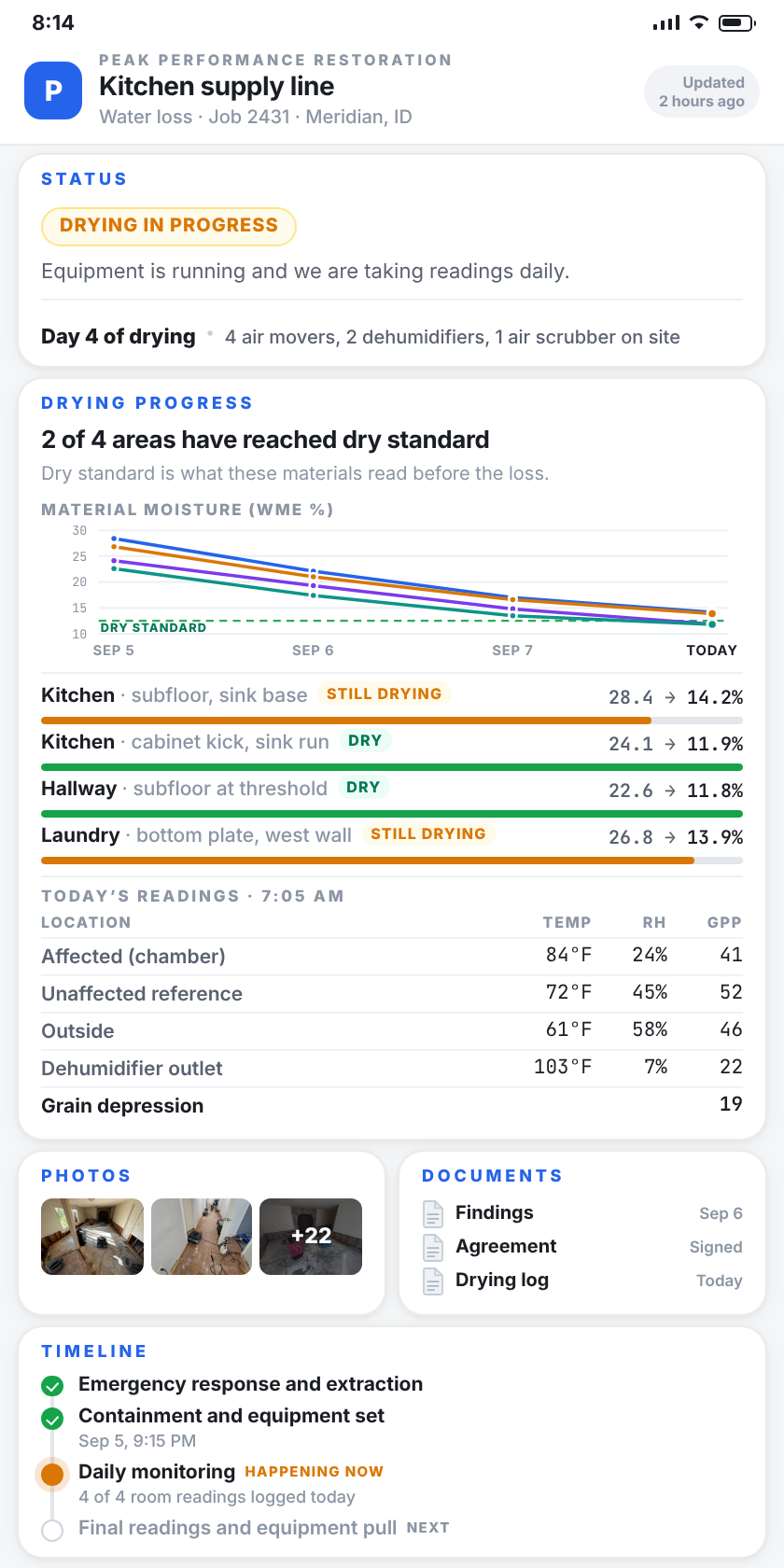
A customer’s job page. It updates the day we take the readings.
If you sent us the client, you can watch too.
Referral partners see the same job page for the customer they sent, no chasing updates before a closing or a tenant turnover. There is no fee in either direction, and the relationship stays yours.
How we decide a job is finished
Dry is a measurement, not a number of days. Drying is finished when the wet material reads the same as unaffected material of the same kind in the same building, which is why a technician puts a meter on every affected room every day of the job and logs the number against that standard. You see all of them.
Room 06 · 7'-0" x 7'-0" · 49 sq ft
Laundry
Still above standard on day 4
Material affected
OSB subfloor, the bottom plate and the first 24 inches of framing. Drywall flood cut at 24 inches, insulation bagged out.
Equipment on it right now
2 Air movers
On the open framing and the subfloor, angled at the wall cavity that was cut open.
HEPA air scrubber
Runs because drywall was cut in an occupied house. It catches the gypsum dust before it reaches the rooms nobody is working in. Nothing hazardous was found here.
Where the washer supply line let go. Wettest material on the job, and the last thing that will reach standard. Nobody guesses at this one, it gets read every morning.
Chamber air, taken at the dehumidifier intake
| Day | Temp | RH | Grains |
|---|---|---|---|
| Day 1 | 78 F | 64% | 92 gpp |
| Day 2 | 84 F | 44% | 77 gpp |
| Day 3 | 86 F | 33% | 61 gpp |
| Day 4 | 85 F | 26% | 46 gpp |
| Unaffected | 71 F | 48% | 54 gpp |
The chamber is holding 8 grains per pound less moisture than the unaffected side of the house. That gap is what pulls water back out of the framing. Without it, air movers just move wet air around.
Day 1 this job ran two LGR dehumidifiers and sixteen air movers. Equipment comes out room by room, on the reading, which is why three of the six rooms are already clear.
1,300+ moisture readings documented this year, across 38,000+ square feet of structural drying.
Written down on every job
Daily moisture readings
Per room, per day, against the dry standard, proof the structure dried, not just that equipment sat there.
Photo documentation
Numbered photos of every affected area, before and after, tied to the job record.
Written scope
What we are going to do, room by room, written before we do it. You have a copy and so does anyone else you send it to.
Line-item estimate
Every task, quantity, and rate on its own line, in the format carriers work in, with supplements written the same way when the scope grows after demo.
What we do
Water is the trade. Mold is what water becomes when it sits for a couple of days. Fire and storm arrive as water losses too: the water the hoses left, rain the wind drove sideways, a roof opened up. Find the water, dry it, prove it dried, then put the building back. Residential and commercial, across the Treasure Valley and the mountain communities north of it.
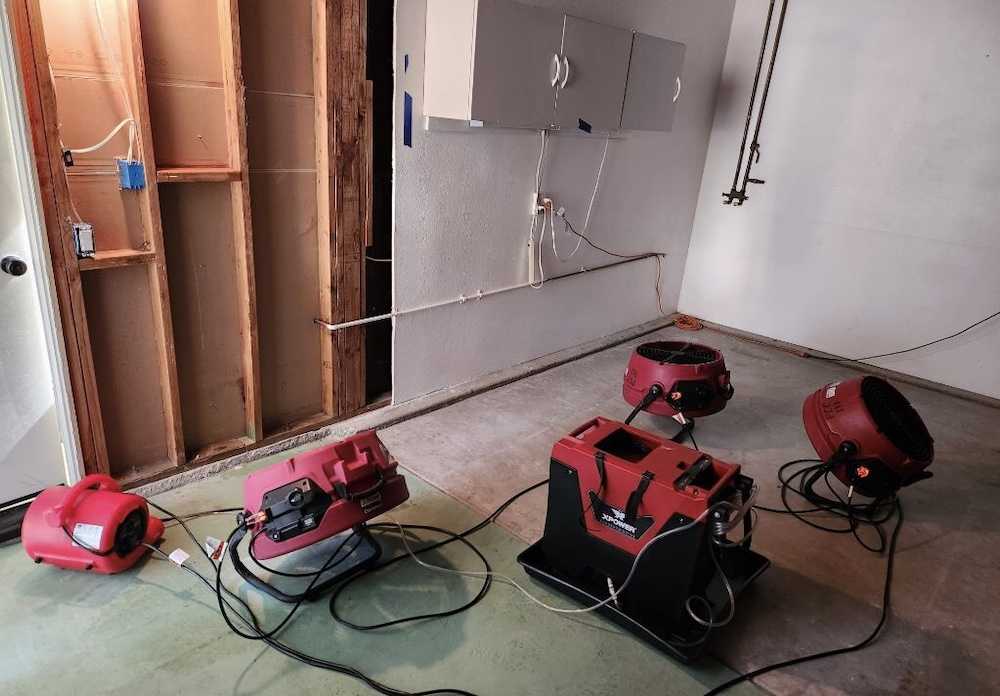
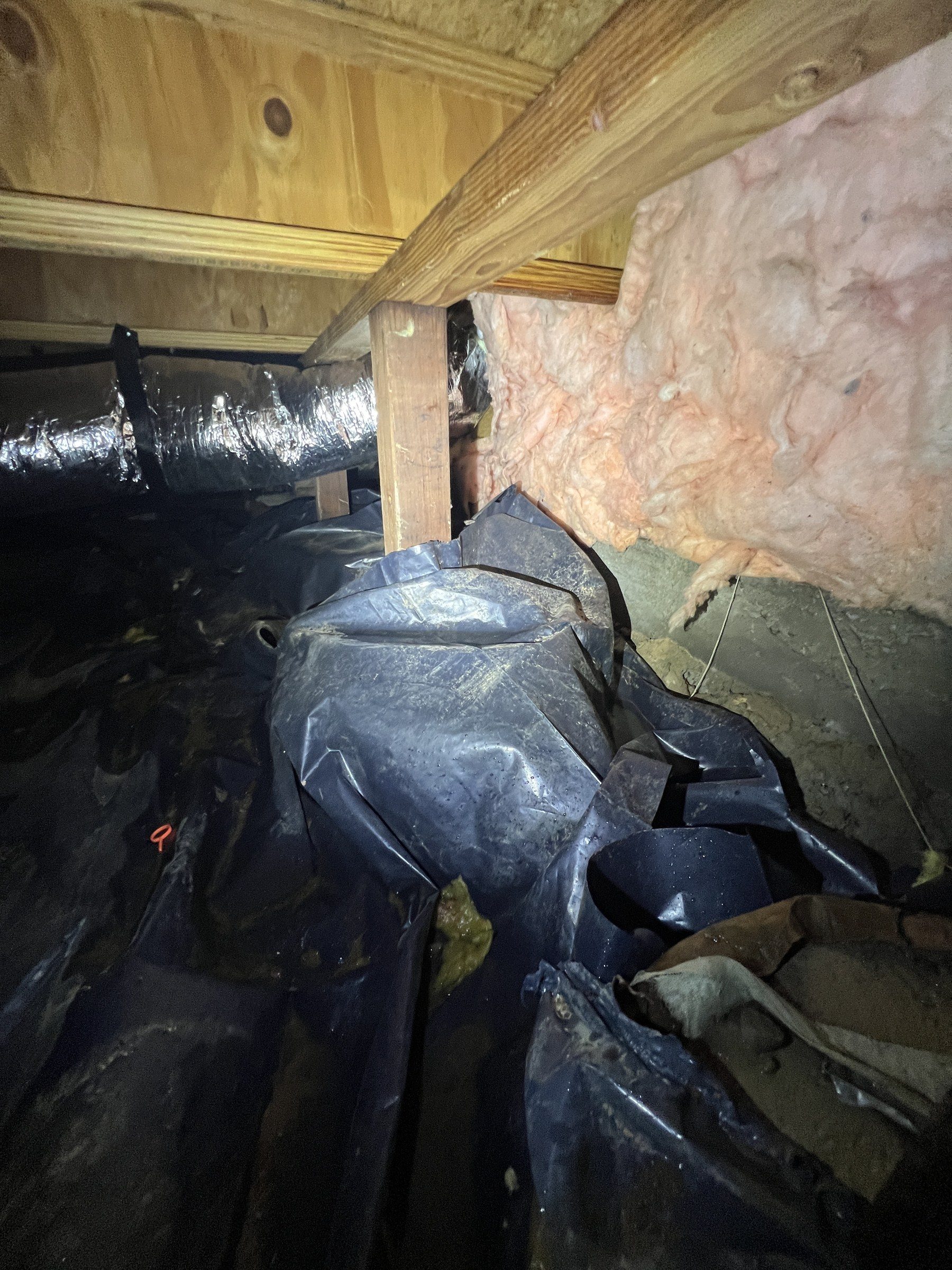
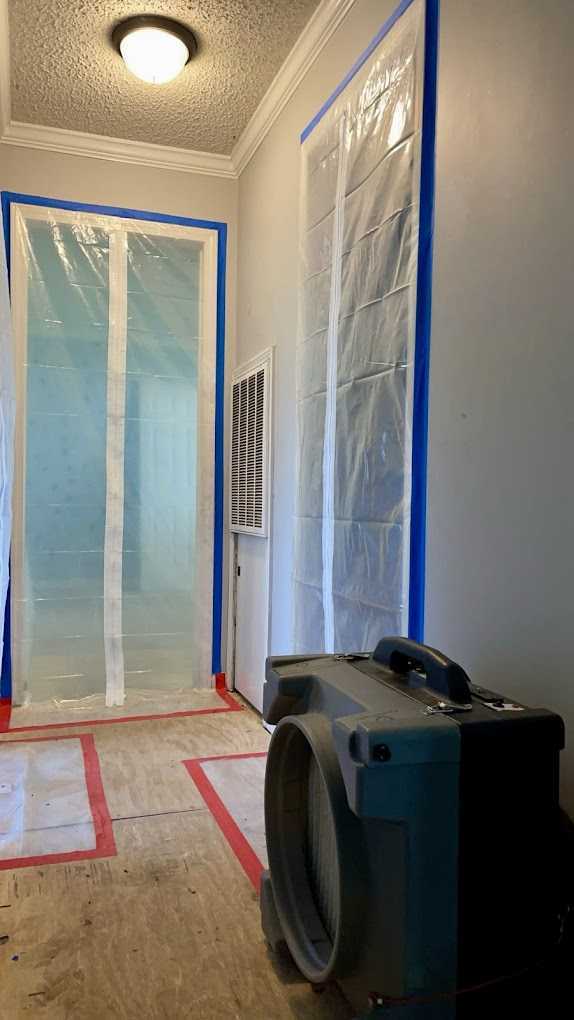
What our job sites look like
Clean containment, labeled equipment, cords run on purpose. You live around this work for days, it should be built like it.
Why the equipment sits where it sits
Every fan and every duct on a job is placed for a reason, and the reason is usually pressure. This is a whole-house drying setup drawn the way we plan one: crawlspace contained and run as its own chamber, air scrubbed and exhausted outside, warm house air pulled down through the wet framing. Touch any number.
Drawing DS-01 · Structural drying, isometric section
What all the fans are actually for
One connected system: the crawlspace contained and held negative, warm house air pulled down through it, and the water leaving the building on purpose. Pick a keynote to see what each piece does and why it is there.
Read the drawing
Drying is a pressure problem before it is an equipment problem
Fans alone move water from your framing into your air. What makes a building dry is where that air is contained, which direction it is moving, and what pulls the water back out of it before it lands somewhere else. Every keynote below is one decision in that chain.
How the drawing is coloured
- Air and water
- Containment and liner
- Caution, sealed off
- Hidden behind material
Hover, tap, or tab to a numbered keynote. Escape clears it.
Three ways in
Free answers one question about one spot, out loud, before we leave. $279 puts instruments on the whole house and ends in a written report you keep. $18 a month makes that report annual and turns the dues into repair credit. One ladder, and you can get off at any rung.
Full Inspection$279
A whole-house moisture & mold inspection, with the price published.
For the musty smell you can’t trace, the stain that came back, the crawlspace you’d rather not guess about. One visit, instruments on every part of the house a problem can hide in, and a written report in your portal at the end of it.
- Thermal imaging and moisture detection
- LiDAR moisture mapping and humidity testing
- Crawlspace and attic inspection
- Wall-cavity imaging and odor source tracing
- A written report with readings, photos, and next steps
Credited in full against the job if you hire Peak. No minimum, no expiry.
If the visit turns into a covered claim, the fee goes on the estimate as the emergency service call, which is the carrier's line rather than yours.
The free visit is different work, not a smaller version of this one. Free is the one area you called about: a meter on the material, humidity in the room, an answer out loud, and nothing in writing. The $279 visit is the whole house and the report. Restoration companies don’t usually publish prices. We’d rather you know one before anyone drives anywhere.
Two locations
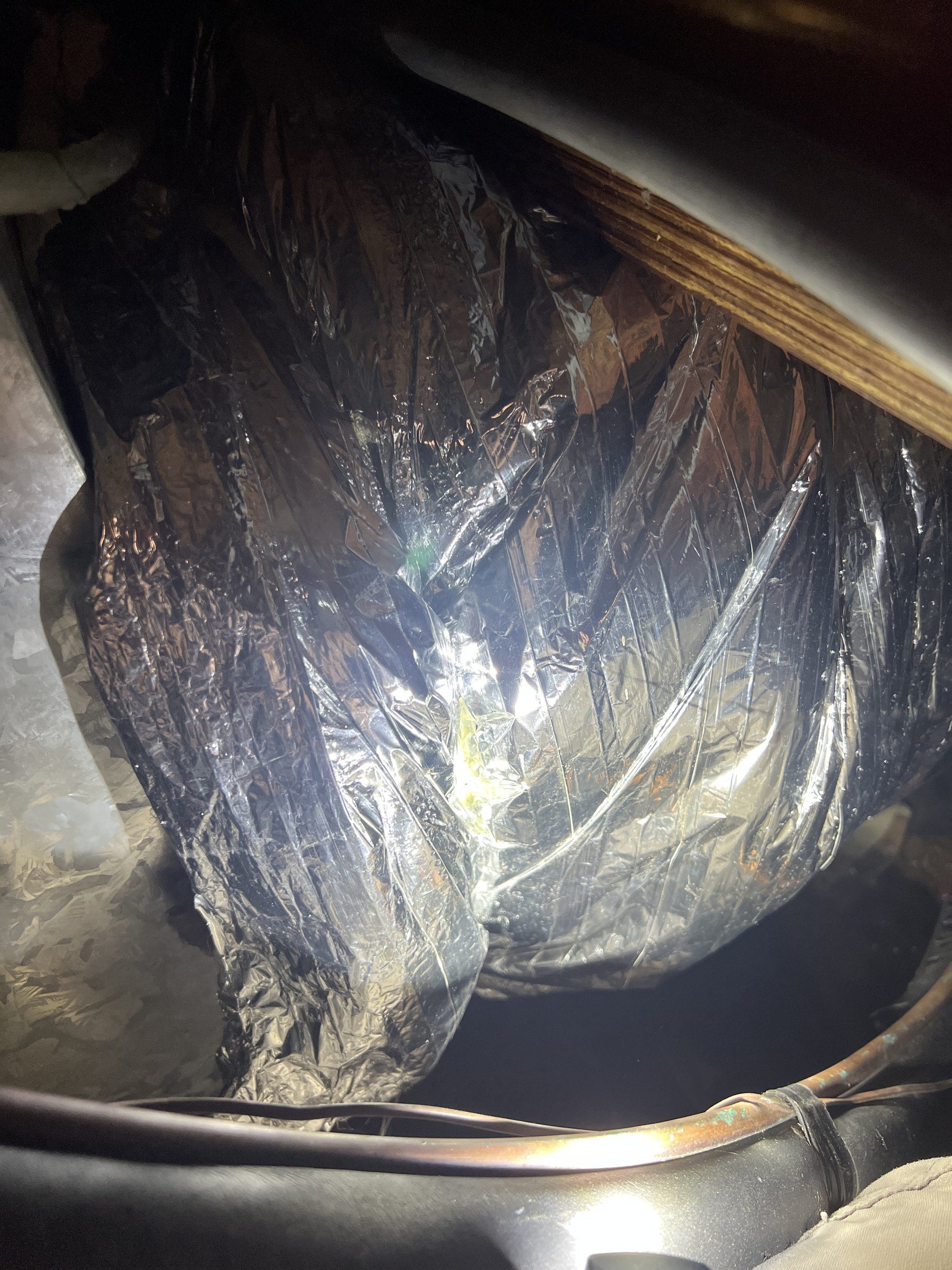
Meridian office, Nampa yard, locally owned for ten years and serving the whole Treasure Valley. Both locations.
Who runs the job
A certified technician runs every job. Not a dispatcher, and not whoever was closest. The same IICRC certified tech sets the scope, places the equipment, takes the daily readings, and signs off that the structure has met the dry standard. License RCE-67387.
The same technician who scoped your job takes the readings on it.
What shows up on the truck
- Low-grain refrigerant dehumidifiers
- Pull water out of the air itself, so the room dries instead of just moving air around.
- Centrifugal air movers
- Placed to the moisture map, angled at wet surfaces, not aimed randomly at a room.
- Injection drying systems
- Push dry air inside closed wall cavities, which often saves the wall from being opened.
- HEPA air scrubbers and negative air
- Keep what we disturb inside the work area and out of the rest of your house.
- Thermal imaging and penetrating meters
- Find the wet material behind finishes, so the scope matches reality.
- Truck-mounted and portable extraction
- Take the standing water out first, because every gallon removed is a day off the dry-out.
Every unit placed on your job is labeled and logged, so the equipment on the invoice is the equipment that was in the room.
Save our number
People usually call us from the room the water is in, standing in it, holding a phone in a wet hand. One tap adds our line, the Meridian address, and what we handle to your contacts. Put us in your phone before you need us.
Opens your contact app with everything filled in. Nothing is sent to us, and nothing signs you up for anything.
If it is happening right now, stop reading and call.
A person answers 24 hours a day. Meridian, Boise, Nampa, Caldwell, and the valley between.